
Buy 2, get 1 free30 days to change your mindBoxed and ready to giftLaboratory grown · nothing mined
The adjustable slider knot on a Mossante cord bracelet
A round brilliant moissanite set in a polished bezel on braided cord
A Mossante cord bracelet worn on the wrist
Moissanite on adjustable cord

Born in a falling star


In 1893 a French chemist pulled a crystal out of an Arizona meteorite crater. He thought he had found a diamond.

He had found something rarer.

Where it comes from

From a crater to your wrist

Six pictures. One minute.

Something hit Arizona
About 50,000 years ago

Something hit Arizona

An iron meteorite struck the high desert and left a crater three quarters of a mile across. It is still there.

Henri Moissan went looking
1893

Henri Moissan went looking

The chemist who first isolated fluorine, and who would win the Nobel Prize for it, began sifting fragments from the crater.

Crystals that threw colour
The find

Crystals that threw colour

They flashed more fire under his lamp than anything he had handled. He recorded them as diamonds. Crystal photograph by Beeblebrox-ish, CC BY 4.0.

He was wrong, and it was better
1904

He was wrong, and it was better

Eleven years of work proved them to be silicon carbide. George Kunz named the mineral moissanite, after him.

Set by hand
Today

Set by hand

Each stone is seated into its bezel one at a time, under a loupe, on a jeweller’s bench.

Strung by hand
Today

Strung by hand

The cord is threaded through the bezel and the two sliders, then trimmed and sealed.

Moissanite against diamond

Side by side

Dispersion is how much colour a stone throws. Moissanite throws more than a diamond does.

Two colourless round brilliant stones under one light. The stone on the left throws saturated orange, green and violet fire. The stone on the right stays cool and white.

An illustration of dispersion. The measurements below are the real figures.

MoissaniteDiamond
Fire dispersion
0.104
0.044
2.4 times the colour
Brilliance refractive index
2.69
2.42
Hardness Mohs
9.25
10
Both are harder than sapphire.
Made of
Silicon carbide
Carbon
Origin
Grown
Mined
Nothing dug up
Choose

Pick your colours

Pick a colour for each bracelet. Every third one is free.

One size. Two sliders adjust it to any wrist — nothing to measure, nothing to send back.

FreeShipping always
30 daysTo change your mind
BoxedReady to gift

Questions, or a bigger order? Email info@mossante.com

What it is made of+
A 4 mm round brilliant moissanite in a closed bezel of 925 sterling silver, gold plated, on a 28 cm braided cord. Laboratory grown, not mined.
Shipping+
Dispatched within 1 to 2 working days, then allow 6 to 10 working days in the US; international orders can take a little longer. Free and tracked, to the US and worldwide.
Returns & exchanges+
Thirty days from delivery. Send it back unworn in its box for a refund; return postage is yours. If you keep part of a pair or bundle, what you keep is charged at the single price. Details in the Refund Policy.
On the wrist

How it actually wears

A cut-out shot flatters. This is the size it really is, on an arm.

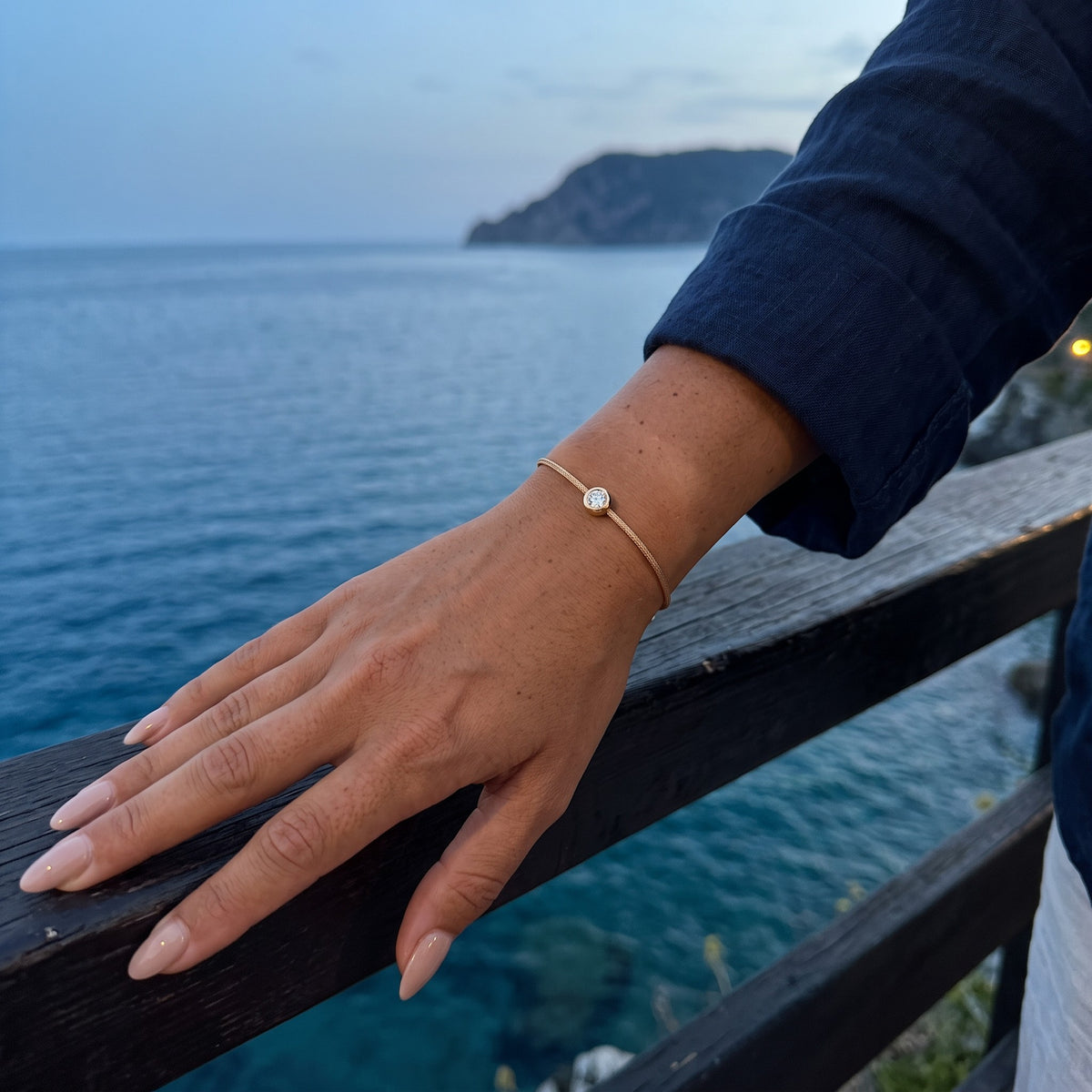
The Gold bracelet worn at a railing above the sea
Gold
The Red bracelet worn beside a pool
Red
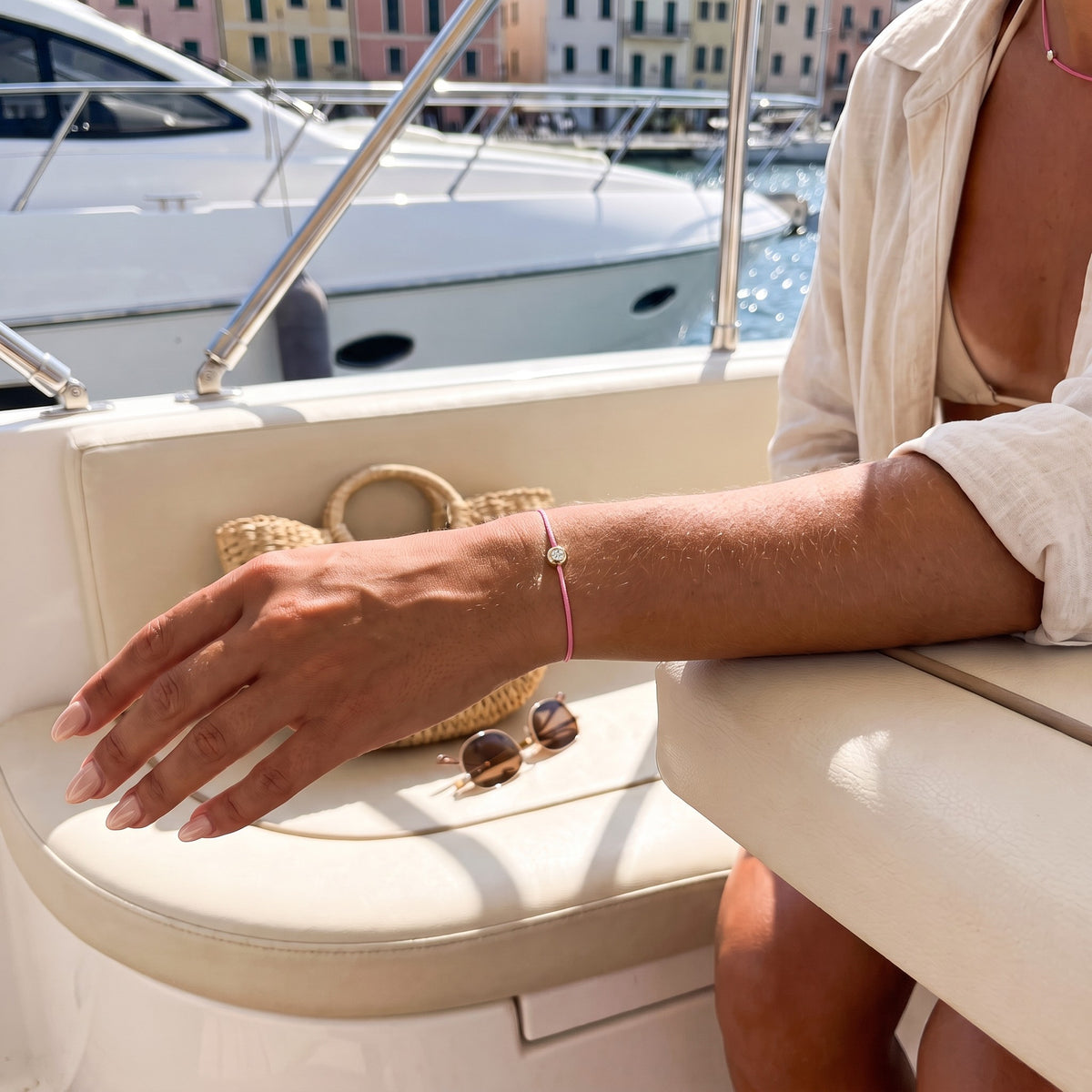
The Pink bracelet worn on a boat deck
Pink
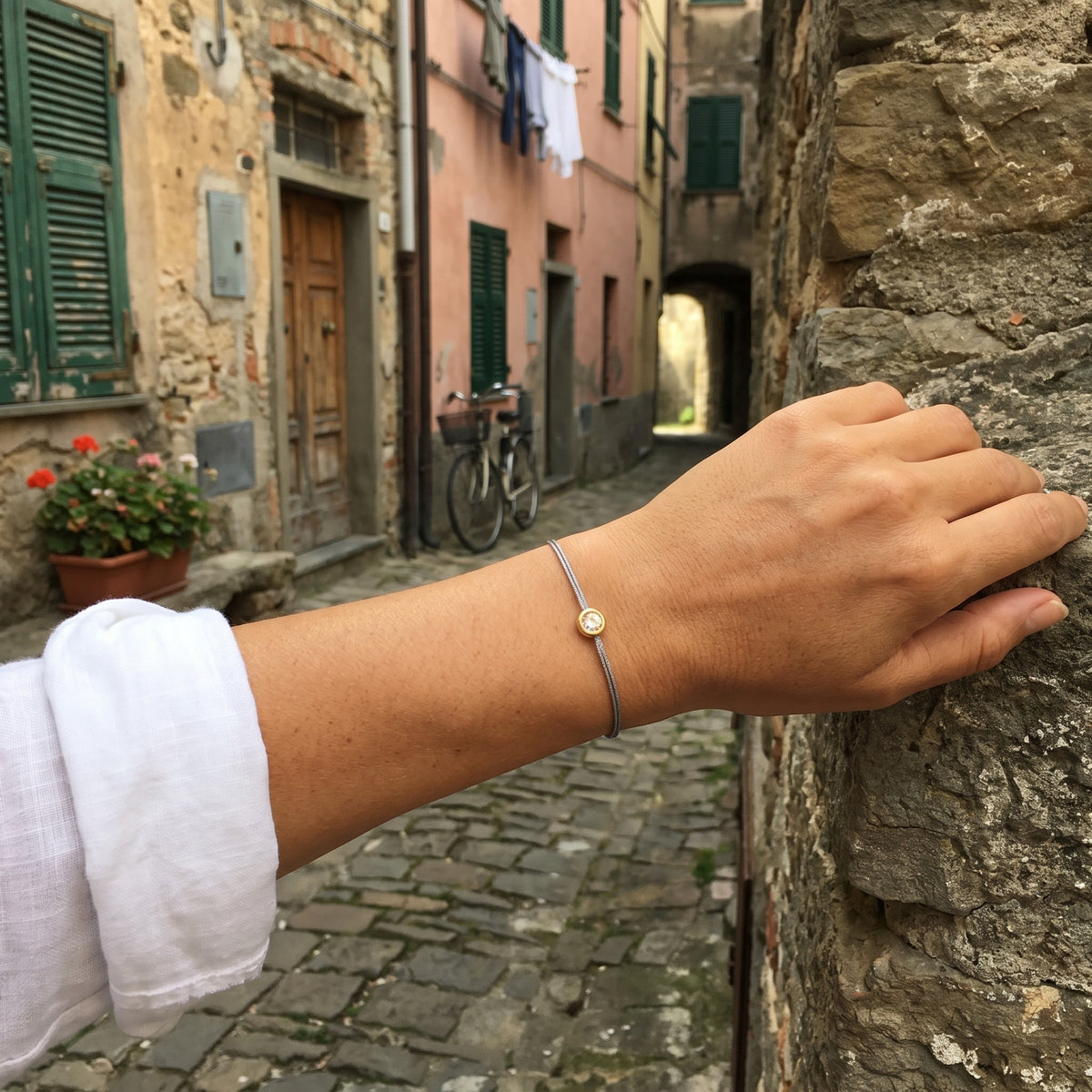
The Silver bracelet worn beside a bowl of grapes
Silver
The Green bracelet worn in a garden
Green
The Orange bracelet worn beside oranges by the sea
Orange

One stone, six colours of cord.

Pick your colour
Macro photograph of the gold-plated bezel with the braided cord passing through it
What it is

Closed in a bezel, not held in prongs

A 4 mm round brilliant moissanite, sealed into a rim of gold-plated silver. Nothing sticks out to catch a sleeve, and there are no claws to bend open and drop the stone a year from now.

9.25 on the Mohs scale. Only diamond is harder.

See the six colours
Three Mossante cord bracelets in Gold, Red and Pink laid one above the other
Why people take two

One is a detail. Three is a decision.

The cord is fine enough to layer without bulk, so they sit together on one wrist and against whatever you already wear.

Buy 2, get 1 free. Every third bracelet is on us.

Build a stack
A red Mossante cord bracelet in its open white box lined in black velvet, the gift bag beside it
Giving one

It arrives ready to hand over

Every order arrives in a white box lined in black velvet, in a gift bag, so there is nothing to wrap and nothing to explain. It leaves us within 1 to 2 working days.

Boxed. Free tracked shipping. 30 days to change your mind.

Choose a colour
Before you ask

Questions worth answering

Is moissanite just a fake diamond?+
No. It is its own mineral — silicon carbide — first found by Henri Moissan in an Arizona meteorite crater in 1893. It is not an imitation of anything, and it throws more fire than a diamond does: 0.104 against 0.044.
How big is the stone?+
4 mm across, cut as a round brilliant. Big enough to catch light from across a room, small enough that you stop noticing you have it on.
Will it fit my wrist?+
Yes. The cord is 28 cm with two sliding knots, so it draws in to any wrist and stays where you set it. One size, nothing to measure, nothing to send back for a swap.
What is it actually made of?+
A 4 mm round brilliant moissanite in a closed bezel of 925 sterling silver, gold plated, on a 28 cm braided cord. The stone is laboratory grown, not mined.
When will it arrive?+
It leaves us within 1 to 2 working days, then allow 6 to 10 working days in the US; international orders can take a little longer. Shipping is free and tracked, to the US and worldwide, so you can watch it come.
What if I do not like it?+
Send it back unworn in its box within 30 days of delivery for a refund. No reason needed; return postage is yours.
How do I reach you?+
Email info@mossante.com. A person answers, usually within one working day. Write to the same address for a bigger order or a change to your order. If it is a gift, tell us and we will leave the prices off the paperwork.

Anything else? A person answers at info@mossante.com